Because of its lower population density and vast geography, rural America has historically had less access to reliable wireless broadband than urban areas. It is a matter of numbers: Cellular carriers who exist for profit don’t want to spend money building in areas that offer lower returns than cities do.
This is one of the many reasons that FirstNet was created. As the nationwide public safety network built for and managed by first responders, FirstNet puts service first, not profits.
As Jason Porter, now AT&T’s Senior Vice President of Supply Chain and Transformation, puts it, “FirstNet is built for all public safety. That means every first responder in the country – career or volunteer; federal, tribal, state or local; urban, suburban or rural. And reaching rural and remote parts of America is one of our top priorities. Using all AT&T LTE bands and Band 14 spectrum, FirstNet currently covers more than 2.61 million square miles.”
Two points to note: AT&T provides network services to FirstNet, but FirstNet calls the shots—including where new towers to serve rural and remote America are built. Band 14 is a VIP lane on AT&T that gives first responders priority at all times under FirstNet’s Priority and Preemption rules.
How FirstNet Bridges Rural Connectivity for First Responders Across America
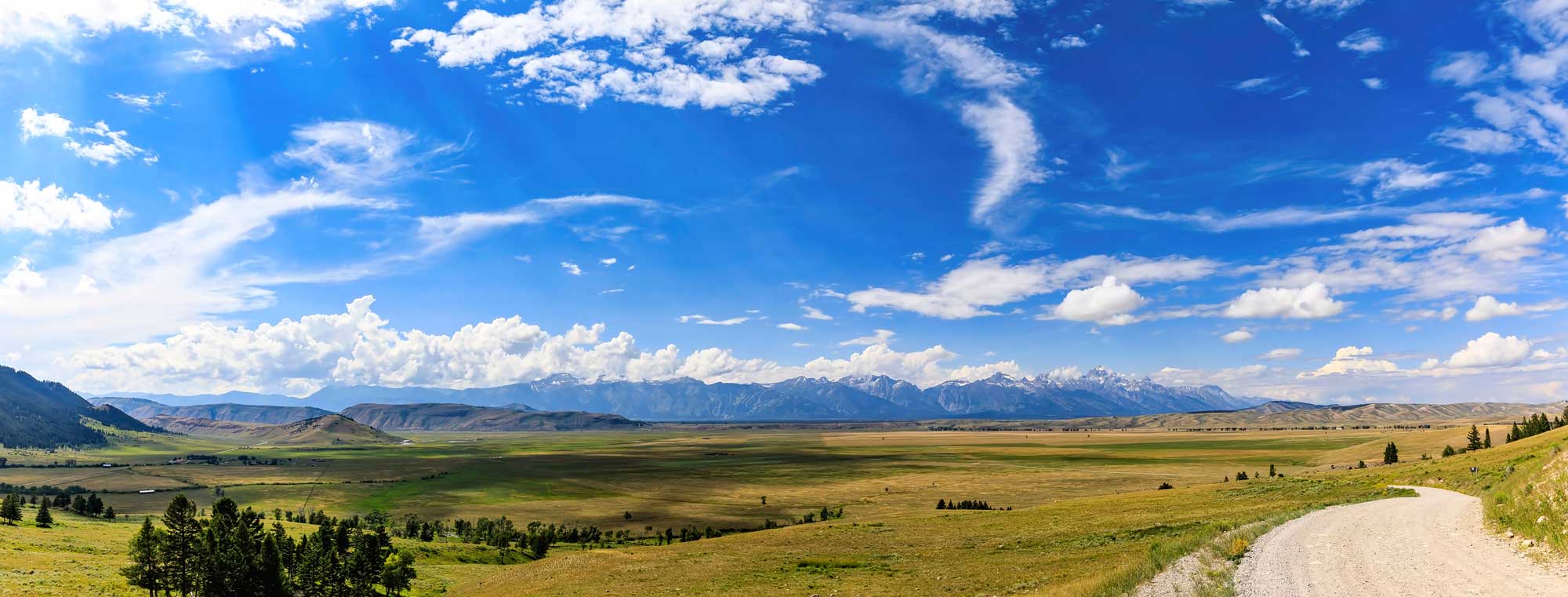
The landscape of rural America is vast and often rugged, especially in the West with its many mountains, valleys, and canyons. These regions are difficult and expensive to cover, requiring significant investments in towers and transmitters to bridge the gap.
Using money from its member fees—never taxpayer dollars—FirstNet and AT&T have been building this infrastructure. They include over 1,000 new, purpose-built FirstNet transmission sites in places such as Lusk, Wyoming; Tilghman Island, Maryland; Yamhill County, Oregon; and Preston County, West Virginia. “These sites were identified by state and public safety stakeholders as priority locations,” said Porter. “With FirstNet, it’s about where first responders need connectivity. That’s what is driving our FirstNet build.”
Why FirstNet Expands Coverage When Commercial Networks Fall Short
Commercial networks decide where to build new cell towers based on their profit potential. FirstNet builds them based on first responder needs, which is why FirstNet coverage includes so many rural, remote, and tribal areas. “Were it not for FirstNet building those towers, there’s no way that state and local government could afford to build them to provide this coverage,” said Byron Oedekoven, former Sheriff of Campbell County, Wyoming, and former Executive Director for the Wyoming Association of Sheriffs and Chiefs. “When it comes to providing support for rural America, FirstNet comes through.”
Expanding Coverage Where It is Needed Most
Expanding coverage where it is needed most is what FirstNet is all about. Although immediate public safety response is a priority, FirstNet also enables improved services in rural areas. For example, in the remote region of Jackman, Maine, FirstNet enables telehealth support to paramedics 24/7, covering evenings and weekends when the local health clinic is closed.
New cell sites and deployable assets
To maximize support in rural America, FirstNet and AT&T engineers often get creative with infrastructure. “Sometimes they’ll put a tower on the side of a cliff to deliver coverage,” Oedekoven said. “Sometimes they’ll put it on top of an existing water tower—whatever works to get the job done.”
FirstNet also has a fleet of deployable temporary cellular towers and transmitters to fill in gaps during emergencies, or until permanent towers can be put in place. “For instance, during a solar eclipse in Casper, Wyoming, FirstNet brought in temporary cell service towers to handle the massive influx of people and ensure first responders could effectively manage medical emergencies,” said Oedekoven. “This is just one of the ways that FirstNet serves rural America.”
Coverage improvements in difficult terrain
All across America, FirstNet is continuously improving its network to support 5G and other technological improvements. These upgrades result in fewer dropped calls and higher clarity for first responders, even when they are traveling through mountainous terrain.
Supporting emergency response during disasters
Effective communication in disasters is critical, especially when the general public ties up commercial bandwidth by sending photos or videos. This is where FirstNet’s Priority and Preemption service is so vital for first responders. “It ensures that police, fire, and EMS can get their calls through when the commercial networks are congested,” Oedekoven said. “Add in FirstNet’s fleet of deployables, and this agency supports rural America like no one else.”
How FirstNet supports NG911 in Rural America
Next Generation 911 (NG911) is the next generation of 911 service, allowing smartphone users to be located and helped as easily as landline users are today.
AT&T ESInet’s NG911 call routing service now connects to FirstNet to increase reliability. When calls fail on the main network, ESInet automatically fails over to FirstNet to ensure that emergency calls are delivered quickly and efficiently.
Why Rural Agencies Choose FirstNet
Rural public safety agencies are choosing FirstNet due to its wide-area coverage, reliable service, and commitment to constant improvement.
“Ultimately, FirstNet provides reliable communication where commercial networks simply do not have the incentive to build,” said Oedekoven.
FAQ
What is FirstNet support in rural America?
FirstNet provides dedicated, priority wireless broadband coverage to rural first responders. It builds towers and transmitters based on public safety needs—such as dangerous terrain or high-incident areas—rather than commercial subscriber counts.
How does FirstNet improve communication during disasters?
It offers Priority and Preemption to first responders on Band 14. This ensures that they can communicate clearly and without interruption, even when commercial cellular networks are overloaded during emergencies or mass events.
How does FirstNet help rural and tribal communities?
By funding and building infrastructure in difficult terrain like canyons and mountains, and providing deployable cell sites when regular coverage fails, FirstNet ensures that their first responders have access to reliable, stable wireless broadband.


Be the first to comment on "How FirstNet Expands Coverage in Rural Communities"