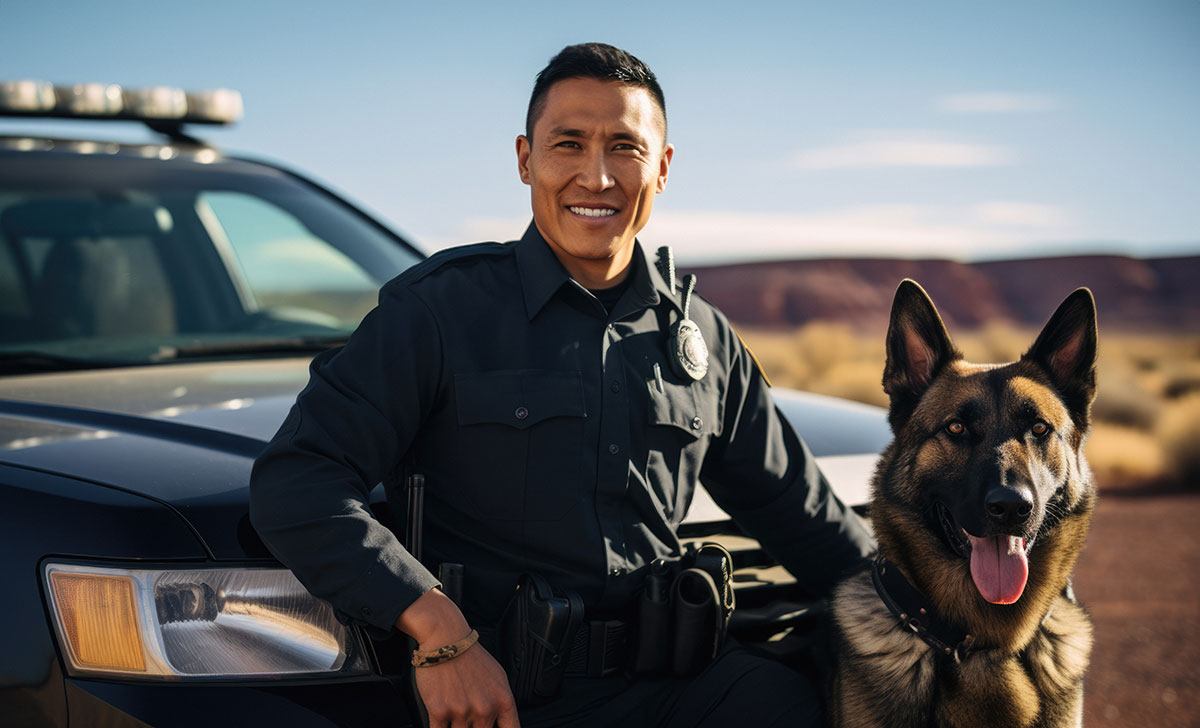
There are approximately two and a half million tribal members living on about 60 million acres of trust and restricted lands.
Many rural tribal communities have historically operated with limited or poor infrastructure, including public safety communications, which have to cover large areas with little equipment.
When trouble occurs, it can be difficult for tribal police, fire, and EMS personnel to communicate with their Dispatch centers and other agencies. It can be just as difficult for these tribal agencies to talk with police, fire, and EMS from other jurisdictions, along with the FBI and other federal agencies.
Why Tribal Lands Have Been a FirstNet Build Priority
FirstNet, the broadband wireless network that prioritizes first responder communications, recognized early on that tribal lands needed dedicated attention for public safety communications. That’s why this agency has taken tangible steps to improve first responder connectivity in a number of tribal communities.
The Historical Connectivity Gap on Tribal Lands
“From the very beginning, it’s been recognized that the tribes had a historical connectivity gap,” said Walter Lamar. He was an FBI special agent for 19 years, then served at the Department of Interior before founding Lamar Associates and “providing training all across Indian country” until 2015. Lamar is now a consultant for AT&T FirstNet.
This connectivity gap exists largely due to the rural and expansive nature of many reservations. “A lot of the tribes, especially the large land-based tribes in the northern part of the United States, live on vast reservations,” Lamar said. “They’re not huge population centers, so it just simply wasn’t profitable for commercial cellular carriers to build infrastructure in all the areas.”
How the FirstNet Build Prioritized Tribal Areas
Because FirstNet is built to provide nationwide service to first responders, rather than generating profits, the agency has prioritized improving FirstNet tribal coverage. It has done this by building new cellular infrastructure in tribal communities such as the Nez Perce Reservation (Idaho), the Spirit Lake Reservation (North Dakota), and the Yankton Sioux Reservation (South Dakota).
This agency provides FirstNet tribal first responders with access to over 100 deployable network assets, free of charge. These assets include Satellite Cell on Light Trucks (SatCOLTs), flying cells on wings (drones), and compact rapid deployables.
FirstNet is doing this work in close consultation with the tribal communities it serves.
What FirstNet Tribal Coverage Looks Like Today
FirstNet’s public safety network has seen significant adoption in these areas. Currently, “more than 350 tribal agencies across the country are using FirstNet,” said Lamar. “This accounts for somewhere in the neighborhood of 36,000 FirstNet connections.”
Reading the Coverage Map for Tribal Areas
“Since 2018, FirstNet coverage of tribal lands has increased by about 64%,” Lamar said. “AT&T has added Band 14 spectrum—the public safety band created by Congress for FirstNet’s exclusive use—to more than 1,900 sites across the tribal nations. Additionally, there have been more than 575 new FirstNet towers built to better serve tribal communities.”
Where Gaps Still Exist and What Is Being Done
Despite the progress to date, “There’s still a need to deploy more infrastructure to provide full and complete coverage, so that the tribes can participate more fully in FirstNet,” said Lamar. “This is why FirstNet’s goal is to continually deploy additional infrastructure throughout tribal lands.”
How FirstNet Supports Tribal Public Safety Operations
FirstNet offers specialized tools and network privileges that equip tribal first responders with reliable, wide-ranging service.
Priority and Preemption on Tribal Lands
FirstNet’s Priority and Preemption services ensure that first responders get VIP lane service on AT&T via Band 14. This applies to tribal lands, just as it applies to everywhere that FirstNet serves.
Interoperability With Surrounding Agencies
Tribal lands often have overlapping jurisdictions that require seamless communication. FirstNet makes their communications interoperable, so that everyone can speak to each other.
Tools and Programs Available for Tribal Agencies
As mentioned above, FirstNet provides deployable network assets to tribal first responders, in addition to its regular wireless broadband service.
Additionally, to help tribal and non-tribal agencies manage complex emergencies, FirstNet created the Response Operations Group (ROG). Led by a team of former first responders, ROG works with tribal, local, and federal agencies during a crisis to coordinate the deployment of network assets.
For tribal first responders covering vast, remote reservations, FirstNet provides advanced location services. This allows agencies such as the Oglala Sioux Tribe Police Department to track the exact locations of officers in real-time.
Looking ahead, FirstNet’s commitment to tribal lands remains strong. “The goal, of course, is to ensure that the first responders in tribal communities have access to the same communication tools that all FirstNet users do,” Walter Lamar concluded.
FAQ
Does FirstNet provide coverage on tribal lands?
Yes. FirstNet provides extensive and expanding coverage on tribal lands nationwide.
How did FirstNet build out coverage in tribal areas?
FirstNet built out coverage by adding hundreds of cell towers in tribal lands and equipping them with Band 14 technology.
Can tribal public safety agencies use FirstNet the same way other agencies do?
Yes. FirstNet offers the same depth of service and support to all of its user agencies, be they urban, rural, remote, or tribal. Everyone gets the same treatment.


Be the first to comment on "How FirstNet Works in Tribal Lands for Public Safety"