
For a system or product to be preferred by its users, it has to offer unique features that are not provided by its competitors.
Take wireless broadband communications for first responders—the police, fire EMS, and other public safety agencies that protect the public and save lives. In this area, FirstNet is the preferred network for first responders, precisely because it has unique features that no other carrier can offer.
“This is why more than 30,000 U.S. first responder agencies are on FirstNet today,” said Michael A. Barnbeck, Deputy Executive Director of the Public Safety Broadband Technology Association and Chair of the PSBTA Technology & Innovation Committee. “They use FirstNet because it provides life-saving features that are unmatched.”
What Is the FirstNet Network?
Created by Congress as part of the “lessons learned” after 9/11, FirstNet is a nationwide wireless broadband network supported by AT&T (after it won a competitive bidding process).
Unlike other ‘public safety’ services provided by other profit-oriented carriers, FirstNet exists to ensure reliable communications for U.S. first responders even in the worst of situations. It is supported by the monthly fees paid by its members, with this money being used to support the network and pay for upgrades, such as FirstNet’s expansion into 5G services.
“FirstNet doesn’t exist for profit, it exists for service,” Barnbeck said. “That’s why Congress created it, and why the FirstNet Authority—which runs FirstNet—has been given special access to America’s airwaves.”
Dedicated Band 14 Spectrum for Public Safety
The special access that Barnbeck is referring to is a slice of the 700 MHz spectrum known as Band 14. It was set aside by Congress to separate public safety communications from commercial traffic.
To use a highway analogy, Band 14 is a VIP lane that ensures that police, fire, and EMS can get through when the regular lanes used by commercial wireless customers are jammed with traffic.
“When you’re in trouble during an emergency, a widespread disaster, or even a mass entertainment event when everyone is on their phones, FirstNet’s exclusive access to Band 14 ensures that first responders can learn about your need for assistance and respond to it fast,” said Barnbeck.
Difference Between FirstNet and Commercial Networks
The primary difference is that FirstNet has exclusive access to Band 14. Other carriers do not. This means their public safety clients often have to compete with commercial network congestion, whereas FirstNet users have a physically separate lane.
FirstNet provides maximum coverage to first responders, especially during emergencies. Historically, commercial carriers have struggled with capacity issues during disasters, including instances where first responder data was “throttled” or slowed down. FirstNet was built to eliminate that risk.
Top Reasons First Responders Prefer the FirstNet Network
FirstNet offers other unique features that explain its status as first responders’ preferred network. They include:
- Priority and Preemption for Emergency Traffic: Although AT&T is allowed to use Band 14 for commercial traffic, first responders have 24/7 priority access and the right to preempt all non-emergency calls.
- Expanded Coverage in Rural and Disaster Areas: FirstNet has the widest and most complete network coverage in the United States, including rural and remote areas.
- Secure Core Network Built for Public Safety: The FirstNet Core is the first-ever nationwide enhanced packet core infrastructure designed and built specifically to support public safety communications.
- Mission-Critical Push-to-Talk (MCPTT): FirstNet’s MCPTT products bring one-button-push convenience to a wide range of communications options.
FirstNet in Action: Real-World Success Stories
The real measure of FirstNet’s success is its performance during disasters. The network’s purpose-built public safety architecture keeps working when other carriers fail. “Meanwhile, FirstNet’s fleet of deployable mobile communications transmitters/towers helps to restore communications in affected areas fast,” Barnbeck said.
Wildfire Response
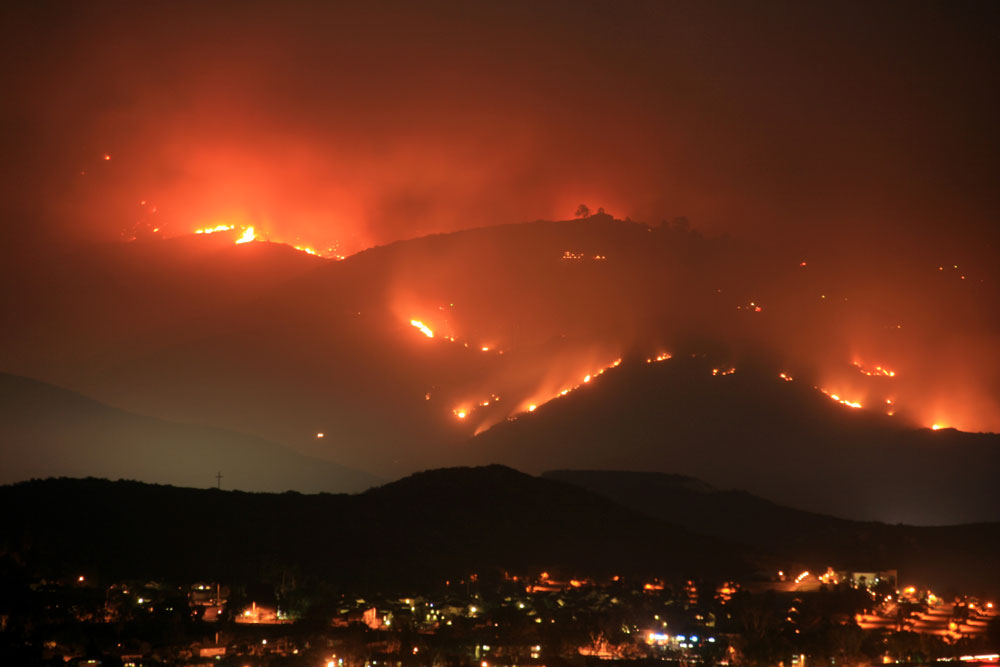
In 2021, Oregon’s Bootleg Fire destroyed more than 400 buildings and hundreds of vehicles.
FirstNet sent its mobile deployables to the scene to connect and support more than 1,000 first responders.
Hurricane Relief and Disaster Communications
In 2022, Hurricanes Ian and Fiona caused tremendous destruction in Florida, Puerto Rico, and South Carolina. FirstNet deployables and personnel were on hand in affected areas, restoring public safety communications as soon as possible. FirstNet also used amphibious vehicles and helicopters to deploy Compact Rapid Deployables to Pine and Sanibel Islands.
How FirstNet Supports the Future of Emergency Communications
Since beginning service in 2018, FirstNet has consistently invested in broadband technology improvements, to provide the very best service for first responders and their communities.
Today, the FirstNet Authority is investing $6.3 billion earned through subscriber fees to add 5G to its existing 4G/LTE service. This investment will keep the network functional and useful to first responders for years to come.
“This is how FirstNet is supporting the future of emergency communications in America,” Barnbeck concluded. “This is why Congress needs to reauthorize FirstNet for the future, as soon as possible. There is overwhelming support from police, fire, and EMS agencies in our country, asking for this to happen.”
FAQ
Why is FirstNet better for first responders than commercial networks?
FirstNet is better because it provides first responders with priority service on Band 14, the VIP communications lane that no other carrier has access to.
What makes the FirstNet network different from T-Mobile or Verizon?
FirstNet offers priority and preemption service to first responders, by separating their video, voice, and data calls from all other traffic on Band 14. This ensures that their calls get through. T-Mobile and Verizon do not offer this service, which can lead to first responders not getting through during excessive network traffic—like emergencies.
Who can use the First Responder Network and how do they qualify?
The details for FirstNet eligibility can be found here.


Be the first to comment on "Why FirstNet is the Preferred Network for First Responders"